Persistent tendon and soft-tissue pain can limit far more than exercise. It can make walking, working, lifting, sleeping, and everyday movement difficult. Shockwave therapy gives clinicians a non-invasive way to address these problems with targeted acoustic energy—without incisions, anesthesia, or a long recovery period.
Used across sports medicine, rehabilitation, chiropractic, orthopedic, and pain-management settings, shockwave therapy supports pain relief, tissue recovery, and a return to function. The right approach depends on the condition being treated, the tissue involved, and the treatment objective.

The 10 Key Benefits of Shockwave Therapy
-
Reduces chronic pain
Shockwave therapy targets persistent pain in tendons, fascia, muscles, and other soft tissues. It is widely used for plantar fasciitis, Achilles tendinopathy, tennis elbow, shoulder tendon pain, and other conditions that can remain painful long after the original irritation began. -
Supports the body’s natural healing response
Targeted acoustic energy stimulates biological activity in the treatment area. This supports the repair processes involved when tissue has been slow to recover with rest, stretching, or standard conservative care alone. -
Improves local circulation
Tissue recovery depends on oxygen and nutrient delivery. Shockwave therapy promotes local vascular activity and circulation, an important benefit in chronic tendon and fascia conditions where recovery can be prolonged. -
Promotes collagen remodeling
Tendons and connective tissue need an organized collagen structure to tolerate normal movement and loading. Shockwave therapy supports collagen remodeling, helping damaged tissue rebuild a stronger, more resilient structure over time. -
Restores mobility and daily function
Pain is only part of the problem. Stiffness, weak grip, reduced range of motion, and difficulty walking or climbing stairs can all affect quality of life. By addressing pain and tissue dysfunction together, shockwave therapy helps patients move with greater comfort and confidence. -
Helps address calcification and chronic stiffness
Calcific deposits and long-standing tissue tightness can restrict movement and prolong pain, especially around the shoulder. Shockwave therapy is commonly used in chronic tendon care, including calcific shoulder tendinopathy, where restoring movement is a key goal. -
Reduces muscle tension and trigger points
Persistent muscle tightness and myofascial trigger points can contribute to pain and altered movement patterns. Shockwave therapy helps release tight tissue and improve comfort in targeted muscle areas. -
Provides a non-surgical, drug-free option
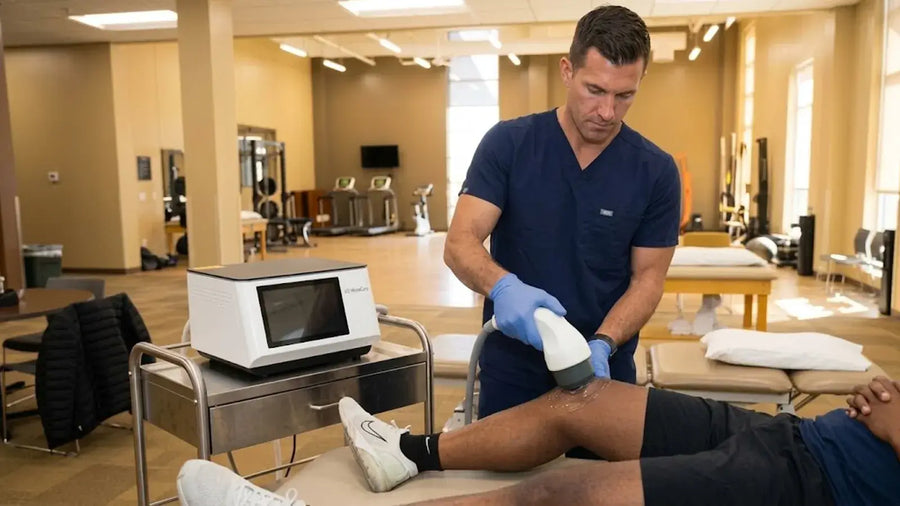
Treatment is delivered through the skin with a handheld applicator. There is no incision, no anesthesia, and no surgical recovery period, giving clinicians a practical option before moving to repeated injections or more invasive procedures. -
Requires minimal downtime and supports cost-efficient care
Sessions are completed in a clinic setting and fit easily into a normal schedule. Compared with surgery and prolonged recovery, shockwave therapy can reduce treatment disruption, recovery demands, and the overall burden of care for appropriate patients. -
Treats a broad range of musculoskeletal conditions
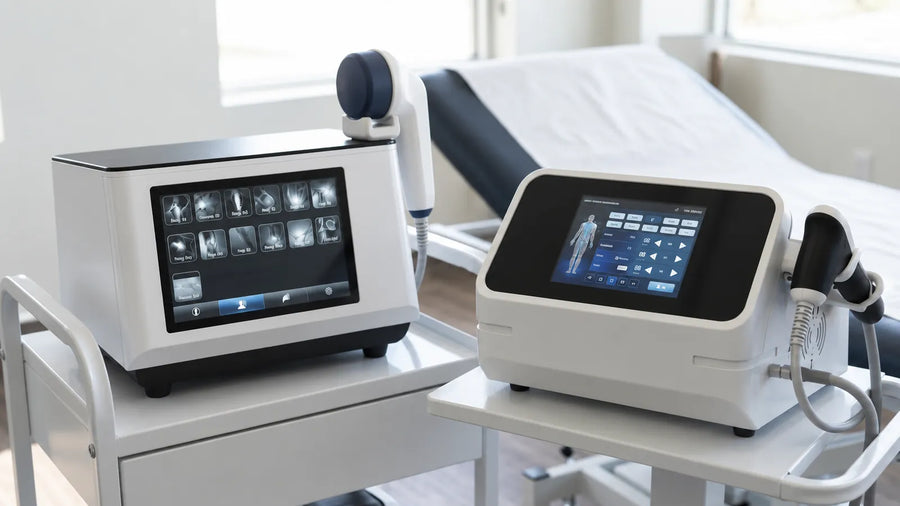
Shockwave therapy is used across rehabilitation and pain-management settings for a wide range of persistent musculoskeletal presentations. The WaveCura Radial Shockwave System and WaveCura Focused Shockwave System give clinics two energy-delivery approaches to match the treatment area and clinical objective.

Conditions Commonly Treated With Shockwave Therapy
Shockwave therapy is most established in chronic tendon and fascia conditions. Common clinical applications include:
- Plantar fasciitis or plantar fasciopathy
- Achilles tendinopathy
- Tennis elbow and golfer’s elbow
- Calcific shoulder tendinopathy
- Rotator cuff–related tendon pain
- Greater trochanteric pain syndrome
- Patellar tendinopathy
- Selected muscle tightness and myofascial pain presentations
It is particularly useful when symptoms have persisted despite appropriate rest, activity modification, rehabilitation, or other conservative measures. A clinical evaluation remains essential: pain in the same location can have different underlying causes, and the treatment plan should match the diagnosis.

How Shockwave Therapy Works
Shockwave therapy uses acoustic energy delivered through the skin to a targeted treatment area. The mechanical stimulus activates a series of biological responses associated with circulation, cellular signaling, pain modulation, and tissue remodeling.
In simple terms, it helps clinicians stimulate a recovery response in tissue that has become persistently painful, stiff, or slow to heal. It is not an electrical shock, and it is not the same as a massage gun or a home percussion device. Clinical shockwave systems are designed to deliver controlled energy according to the treatment target and protocol.
What to Expect During and After Treatment
Treatment begins with a clinical assessment and identification of the painful or dysfunctional tissue. The clinician applies gel to the skin, positions the applicator over the treatment area, and adjusts the treatment settings to the clinical goal and the patient’s tolerance.
Sessions are commonly brief and performed in the clinic. During treatment, patients often feel rhythmic pressure or a focused tapping sensation. Mild soreness, temporary redness, or minor bruising can occur afterward, particularly in sensitive areas. These effects are usually short-lived.
Shockwave therapy is most effective when it is part of a complete treatment plan. Clinicians often combine it with progressive loading, strengthening, mobility work, gait or movement correction, and activity guidance to support durable functional improvement.

Radial and Focused Shockwave Therapy: Why the Right System Matters
Shockwave therapy is not one-size-fits-all. Radial and focused systems use different energy-delivery patterns, allowing clinicians to match the technology to the area being treated.
The WaveCura Radial Shockwave System distributes energy across a broader treatment area and is commonly used for superficial tissue and large muscle groups. The WaveCura Focused Shockwave System concentrates energy at a selected depth, giving clinicians a more targeted option for deeper tissue structures and precise treatment areas.
For clinics, offering both WaveCura systems expands treatment flexibility and supports a more complete musculoskeletal care pathway. Explore the WaveCura Radial Shockwave System and WaveCura Focused Shockwave System.
When Is Shockwave Therapy Appropriate?
Shockwave therapy is a professional clinical treatment, not a self-diagnosis tool. The clinician should confirm the source of symptoms, assess tissue status, and determine whether shockwave therapy fits the treatment plan.
It is not appropriate for every situation. Treatment near a malignant tumor or fetus should be avoided, and specific high-energy focused applications require additional precautions. A qualified healthcare professional should screen for contraindications and tailor the protocol to the individual patient.
Frequently Asked Questions
Does shockwave therapy hurt?
Most patients describe the sensation as intense but manageable pressure or tapping. The clinician can adjust settings throughout the session to maintain an appropriate treatment level.
How long does a session take?
Treatment time varies by body area and protocol, but sessions are typically completed in a short outpatient appointment.
How many sessions are needed?
The number of sessions depends on the diagnosis, chronicity, treatment area, and overall rehabilitation plan. Clinicians reassess progress throughout the course of care.
Can shockwave therapy be combined with physical therapy?
Yes. Combining shockwave therapy with rehabilitation, strength work, mobility training, and activity modification is a common clinical approach.
Is radial or focused shockwave therapy better?
Neither system is universally better. The right choice depends on tissue depth, treatment area, diagnosis, and the clinician’s therapeutic objective.
A Practical Tool for Modern Musculoskeletal Care
Shockwave therapy gives clinics a powerful non-invasive option for treating persistent musculoskeletal pain and dysfunction. It supports pain relief, circulation, tissue remodeling, mobility, and a more efficient recovery path—while allowing patients to remain engaged in work and daily life.
For clinics building a modern rehabilitation or pain-management service, the ability to select between the WaveCura Radial Shockwave System and WaveCura Focused Shockwave System creates greater treatment flexibility and stronger clinical capability.
References
- Shockwave Treatment: A New Wave for Musculoskeletal Care — Mayo Clinic News for Medical Professionals.
- ISMST Guidelines for Extracorporeal Shock Wave Therapy (ESWT) — International Society for Medical Shockwave Treatment.
- Extracorporeal Shock Wave Therapy Mechanisms in Musculoskeletal Regenerative Medicine — Journal of Clinical Orthopaedics and Trauma.
- Best Practices for Extracorporeal Shockwave Therapy in Musculoskeletal Medicine: Clinical Application and Training Consideration — PM&R.
- Effectiveness of Focused Shockwave Therapy versus Radial Shockwave Therapy for Noncalcific Rotator Cuff Tendinopathies: A Randomized Clinical Trial — BioMed Research International.
- Effect of Shockwave Treatment for Management of Upper and Lower Extremity Musculoskeletal Conditions: A Narrative Review — PM&R.
- ESWT for Tendinopathy: Technology and Clinical Implications — Knee Surgery, Sports Traumatology, Arthroscopy.